L’invitation 🇫🇷
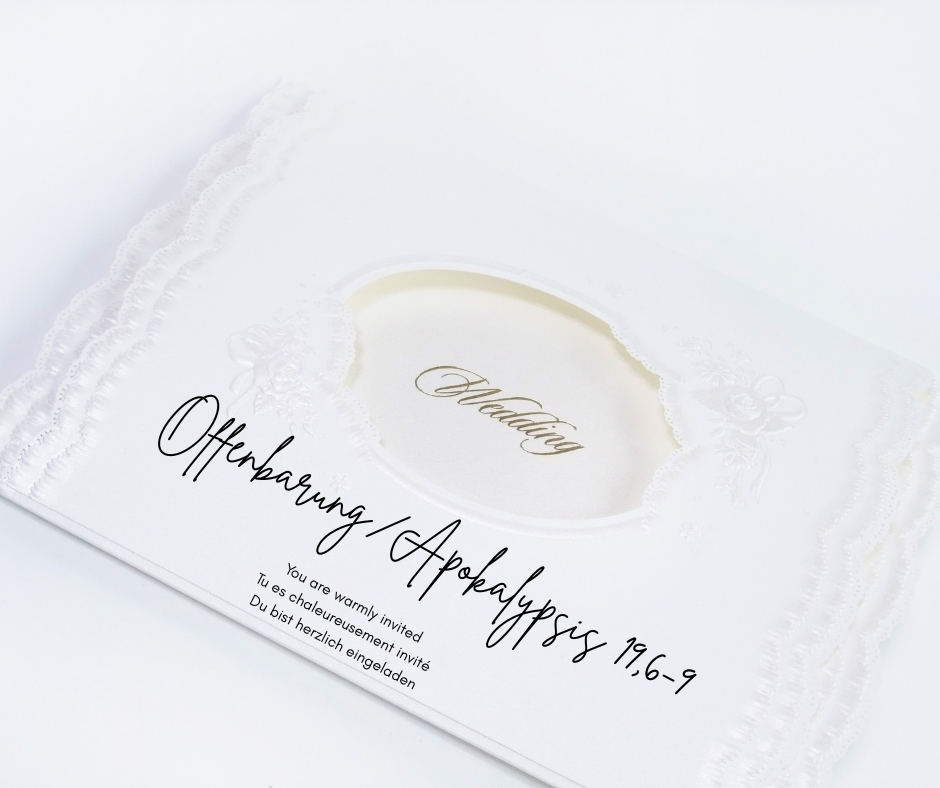
Le texte décrit l’invitation d’Elohim (Dieu) au « festin des noces de l’Agneau » comme symbole du salut et de la vie éternelle. Il souligne clairement que les choses matérielles telles que les biens, la famille ou le confort ne doivent pas prendre le dessus sur cette invitation. Les croyants sont appelés à donner la priorité à Elohim et à vivre activement leur foi. Introduction L’enlèvement de l’épouse de l’Agneau, c’est-à-dire des chrétiens [1], est imminent afin de célébrer le festin des noces dans les cieux. L’ensemble des croyants est la « fiancée » de Yehoshua Mashiah, et le mariage aura lieu dans les cieux après l’enlèvement. Qu’est-ce que le festin des noces ? Le festin des noces de l’Agneau est le rassemblement des croyants enlevés au ciel, tel qu’il est décrit dans le livre de l‘Apocalypse, chapitre 19, versets 6 à 9: « Et j’entendis comme la voix d’une foule nombreuse, et comme la voix de grandes eaux, et comme la voix de puissants tonnerres, disant : Allélou-Yah ! Parce que le Seigneur, l’Elohîm Tout-Puissant a exercé son règne. 7 Réjouissons-nous et exultons, et donnons-lui gloire, parce qu’elles sont venues les noces de l’Agneau, et que son Épouse s’est préparée elle-même. 8 Et il lui a été donné de se revêtir d’un fin lin pur et brillant. Car le fin lin, c’est l’acte de justice des saints. 9 Et il me dit : Écris : Bénis, ceux qui sont appelés au souper des noces de l’Agneau ! Il me dit aussi : Ce sont là les véritables paroles d’Elohîm » Ceux qui participent au festin des noces sont ceux dont le nom est écrit dans le livre de vie. On y reçoit sa récompense, sa récompense pour ce que l’on a accompli sur terre pour le Seigneur. Chacun devra rendre compte, selon les dons qui lui ont été accordés. Selon les Écritures, il y aura des distinctions, des couronnes seront décernées. [2] Chaque fois que la Bible nous parle d’une invitation ou d’un repas commun, cela nous rappelle le banquet ultime lors du mariage de l’Agneau et de l’Épouse dans les cieux. En effet, le Seigneur Yéhoshoua ne nous parlera de rien qu’il n’ait lui-même vécu sur terre. La parabole du festin Dans l’Évangile de Luc 14, versets 15-24, nous lisons le récit du grand repas. Ici, comme dans beaucoup d’autres passages, le Seigneur nous explique les réalités spirituelles en nous confrontant à des choses physiques et en nous les expliquant. « Or ayant entendu ces choses, l’un des festoyants lui dit : Béni est celui qui mangera du pain dans le Royaume d’Elohîm ! 16 Mais il lui dit : Un homme fit un grand souper, et il invita beaucoup de gens. 17 Et à l’heure du souper, il envoya son esclave pour dire aux invités : Venez, parce que tout est déjà prêt. 18 Mais ils commencèrent tous unanimement à s’excuser. Le premier lui dit : J’ai acheté un champ, et il faut que j’aille le voir, je te prie, tiens-moi pour excusé. 19 Et un autre dit : J’ai acheté cinq paires de bœufs, et je vais les examiner, je te prie, tiens-moi pour excusé. 20 Et un autre dit : J’ai épousé une femme, en raison de cela je ne peux pas venir. 21 Et en survenant, l’esclave rapporta ces choses à son seigneur. Alors le maître de la maison, fâché, dit à son esclave : Va rapidement sur les places et dans les rues de la ville, et amène ici les pauvres, les mutilés, les boiteux et les aveugles. 22 Et l’esclave dit : Seigneur, ce que tu as commandé a été fait, et il y a encore de la place. 23 Et le seigneur dit à l’esclave : Va dans les routes et le long des clôtures et force d’entrer, afin que ma maison soit remplie. 24 Car je vous dis qu’aucun de ces hommes qui avaient été invités ne goûtera de mon souper. » Nous lisons ici qu’il existe différentes raisons que quelqu’un peut invoquer pour ne pas participer à ce banquet. Les excuses Dans notre parabole, trois personnes refusent l’invitation. « Mais ils commencèrent tous unanimement à s’excuser », dit le verset 18. Le ventre La première personne doit s’occuper du champ qu’elle a récemment acheté. Dans les champs poussent les plantes, les céréales et les fruits qui nous nourrissent. C’est un symbole des choses que nous mangeons. Cette première personne ne pouvait pas servir parce que la nourriture était si importante pour elle. La deuxième personne, qui a acheté des bœufs (verset 19), a également utilisé son estomac comme excuse. Ces animaux sont une image de la viande que nous mangeons. Tout ce que nous consommons finit dans les toilettes et finalement dans la station d’épuration, peu importe son goût ou son raffinement, peu importe la qualité de l’assortiment du marché ou du grand magasin. Tout ce que nous achetons sur terre n’a pas de valeur durable, même si la qualité est excellente. Il s’agit d’une valeur éphémère, d’une œuvre éphémère. Tout ce pour quoi nous travaillons sur terre reste sur terre, car il s’agit uniquement de préserver les choses terrestres. Cela n’a aucune valeur durable pour le royaume des cieux. La richesse terrestre ne nous donne pas accès au festin des noces. Attention, afin qu’il n’y ait pas de malentendu : le Seigneur approuve la nourriture terrestre, car elle nourrit notre corps. Mais il accorde plus d’importance à la parole d’Elohim, qui nourrit l’âme et l’esprit. La femme Le troisième, qui n’était pas intéressé par l’invitation, a refusé à cause de sa femme. Le mariage était plus important pour lui que l’invitation du Seigneur. Certes, Elohim a dit dans sa parole qu’il n’était pas bon pour l’homme d’être seul. Mais on ne doit jamais faire passer son mariage avant l’invitation du Seigneur ! Cet homme a toutefois refusé le salut à cause de sa femme. Si le Seigneur t’aime tellement qu’il veut te