Articles in English

Yehoshua: YHWH IS SALVATION (Yahweh is Salvation) 🇬🇧

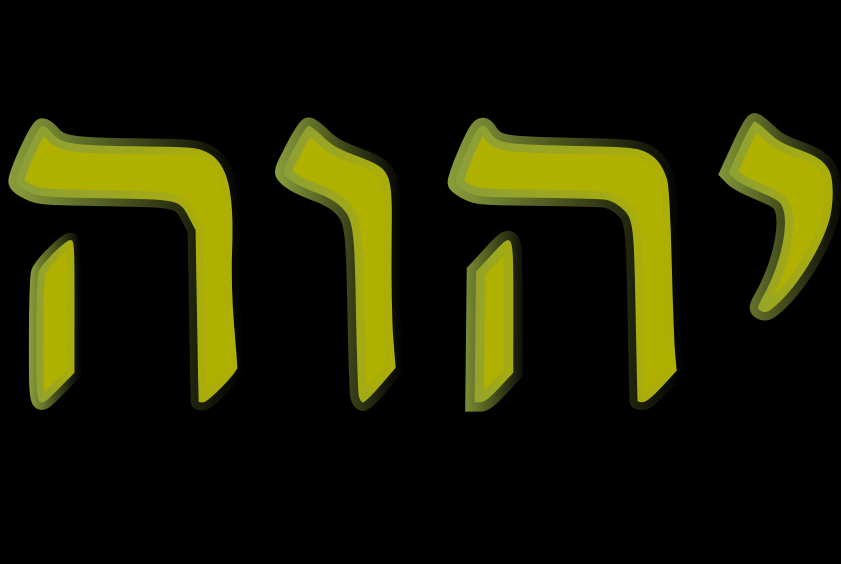
The revelation of the name of Elohim In Jewish tradition, names have great significance. They are more than just a distinguishing feature between different individuals. A name embodies the identity of the person who bears it and says a lot about their mission. For example, the name „Isaiah“ comes from the Hebrew „Yesha’yah“ and means „YHWH has saved“. Indeed, the prophet Yesha’yah described the salvation of YHWH like no other, and his book is rich in messianic prophecies. Yehoshua (Jesus) was no exception to this rule. The names attributed to the Lord confirm his mission, his offices and his divine nature.   1) Yehoshua Mashiah is YHWH In order to understand the meaning of the name Jesus (Yahweh is salvation), it is extremely important to first understand the meaning of the Tetragrammaton (the four letters of the name of Elohim: YHWH). This name occurs most frequently in the Tanakh [1]. The Tetragrammaton YHWH is contained in the name ‚Jesus‘, which comes from the Hebrew „Yehoshua“, meaning „YHWH is salvation“. The four letters that make up this name have a very prophetic meaning.   a) Yod Yod י‎ is the tenth letter of the Hebrew alphabet. It comes from ‚yad‘, which means ‚hand‘. This letter is the smallest in the alphabet. However, it is the one that has the most power. For it is the hand of Elohim [2] that has formed us. „[Yod] Your hands have made me and fixed me: Make me discern, and I will learn your commandments“ (Ps 119:73). „Thine hands have made me and fashioned me together round about; yet thou dost destroy me“ (Job 10:8). The hand or finger of Elohim are signs of his power. Consequently, the name of Elohim begins with a letter that symbolises his power, authority and strength. Indeed, the kingdom of Elohim consists of power (1 Co 4:20 and 1 Thess 1:5). „14 And the magicians did so with their enchantments to bring forth lice, but they could not: so there were lice upon human, and upon beast. 15 Then the magicians said to Pharaoh: This is the finger of Elohim! And Pharaoh’s heart was hardened, and he did not hear to them; as YHWH had said“ (Ex 8:14-15). „But if I cast out demons by the finger of Elohim, then the Kingdom of Elohim has come upon you“ (Lk 11:20).   b) He He ה is the fifth letter of the Hebrew alphabet. It has been translated as „Behold“ in Gen 47:23 and Ezek 16:43. This refers to the Lord Yehoshua Mashiah, who must be presented to the people. John the Baptist introduced the Lamb of Elohim to his disciples (Jn 1:29, 35), and Pilate introduced him as a man (Jn 19:14). The message that the churches must preach is: „Behold, the bridegroom comes“. We read about this midnight cry in Matt 25:6. Only Yehoshua Mashiah alone is to be presented, proclaimed and taught (1 Co 2:1-2; 15:1-11; 2 Co 4:5). The letter He also means praise. After we have come to know the power of Elohim (letter Yod), we express our gratitude through praise.   c) Vav Vav ו is the sixth letter of the Hebrew alphabet. It means „nail“, „hook“ or „fishhook“. In Hebrew, this letter serves as a coordinating conjunction. It represents everything that connects things together. The name Yehoshua (Yahweh is salvation) is the name that brings together people who are so different that they can be one with each other (Matt 18:18-20; Ga 3:28).  It should be noted that Waw is translated as „hook“ in the following passages: Ex 26:37; 27:10, 17; 36:36-38; 38:10, 19, 28. The Lord said to Peter that he would make him a fisher of men (Luke 5:10). With the name Yehoshua (Yahweh is salvation), sanctified sinners are bound to the Gospel and hung. With the letter Waw, we hang on to Yehoshua, like the branches on the vine (Jn 15:1-10).   d) He He ה is the fifth letter of the Hebrew alphabet. It is used a second time to remind people of the importance Elohim attaches to praise. The Lord said to the children of Israel: „I am YHWH: that is my name: and my glory will I not give to another, neither my praise to graven images“ (Isa 42:8) The tetragrammaton YHWH is the most frequently used divine name, with more than 6500 mentions in the Tanakh. Although the exact meaning of YHWH is disputed, it actually derives from the root HWH, which has become HYH or „Hayah“ („I AM“ or „I will be“ or „I will become“ in Hebrew). It is the origin of the name Elohim, which was revealed to Moses in Ex 3:14: „I will become that I will become“. This is also translated as „He who exists by himself“. Thus, the holy Tetragrammaton can also be directly associated with what is expressed in Rev 1:8: „the Being, and the Was, and the Coming“. Since the Jews considered the name of Elohim to be extremely holy and did not want to pronounce it in vain (Ex 3:14; Lev 24:16), they stopped pronouncing the Tetragrammaton long before the emergence of Christianity. As part of a vocalisation and punctuation process that took place between the 5th and 10th centuries, the Masoretes – Jewish scholars – inserted vowels between the consonants of YHWH. They used the vowels of the word „Lord“ for this purpose. Contrary to what many believe, namely that the word should thus mean „JeHoWaH“, their intention was simply that the reader should read the word „Lord“ instead of „YHWH“ when he sees the Tetragrammaton. The tetragrammaton does not appear in almost all French (and also German) Bible versions. In French, it was Pierre-Robert Olivetan (1506-1538) who was the first to translate the French Bible based on the original Hebrew and Greek texts (1535). He rendered YHWH as „the Eternal“ and believed that this came closest to the meaning of this unpronounceable name. In German, following the Jewish scriptures, the name of Elohim has almost always been rendered as „HERR“

Yehoshua: YHWH IS SALVATION (Yahweh is Salvation) 🇬🇧 Weiterlesen »
An apocalyptic climate 🇬🇧

„Therefore, stay awake, for you know neither the day nor the hour when the Son of Man will come“ Matthew 25:13 There are forty passages in the Bible that refer to the end times. These passages were written to warn us. They tell us about the signs that will precede the return of Yehoshua (Jesus). Some signs have already occurred and others are about to occur. Matthew 24 and Luke 21 clearly explain these signs that must precede the return of Yehoshua. Matthew 24:4-7: „4 And Yehoshua answered and said to them: Keep watch! Do not let anyone lead you astray, 5 for many will come in my name, saying: „I am the Mashiah“, and will lead many astray. 6 But you will be hearing of wars and rumors of wars. See that you are not frightened, for those things must take place, but that is not yet the end. 7 For nation will rise against nation, and kingdom against kingdom, and in various places there will be famines and earthquakes“ All these signs are coming to pass. But some signs are more obvious than others: the media talk about these disasters caused by nature or industry. They are spreading all over the world. That is why the world’s leading scientists agree: these disasters are of an extraordinary magnitude. Although these natural disasters have always existed, scientists say that they have become worse in recent years. We see that they have reached apocalyptic dimensions: cyclones, hurricanes, storms or even climatic changes, but also avalanches or earthquakes. Taking the example of the USA alone, hurricanes cause more deaths than any other natural phenomenon. One could cite other examples that are just as bad. Proverbs 8:34: „Blessed is the man that hears me, watching daily at my gates, waiting at the posts of my doors“. Finally, experts say that the climate system will continue to deteriorate, and they also mention that natural disasters will become increasingly destructive in the coming decades. This should awaken dormant consciences. But what does the Church say or do in these end times? Some Christians are surprised by the fact that twenty years ago, for example in France, there was more talk about the return of the Lord than there is today! But Yehoshua ha Mashiah (Jesus Christ) said: „… No, lest while you are pulling the tares you may uproot the wheat with them“ (Matthew 13:29). As ambassadors of Mashiah (Christ), we must keep in mind that the whole world is under the power of Satan. These things should not frighten us, because they must happen, but it will not yet be the end. They only indicate that we have reached the end times. The countdown has already begun: we are on the eve of eternity: „The night has advanced, and the day has drawn near“ (Romans 13:12). The Bible warns us: it advises us to be careful, to watch and to pray: „33 Discern! Be sleepless and pray! For you do not know when the time is. […] 35 Watch therefore, for you do not know when the Lord of the house comes, at evening, or at midnight, or at rooster-crowing, or in the morning“ (Mark 13:33-35). „Blessed is the man that hears me, watching daily at my gates, waiting at the posts of my doors“. (Proverbs 8:34).   Additional information: Mortality caused by natural disasters rose by 60% between 1980 and 2000; this increase is mainly due to global warming and the greenhouse effect. Between 1994 and 2004, 2.8 billion people were affected, of whom 796,408 died (including 226,408 in the December 2004 tsunami in Southeast Asia). Economic losses amounted to approximately $849 billion. The vast majority (95%) of victims are located in the world’s poorest countries. These regions are particularly vulnerable, compounded by the following factors: lack of infrastructure to raise the alarm, disorderly urban development, deforestation and soil erosion, which promotes flooding and landslides. Source: catnat.net (leading website for monitoring natural disasters) In a project report, experts estimate that by 2080, up to 3.2 billion people will be affected by severe water shortages and 600 million by famine due to drought, soil degradation and salinisation. Every year, an additional 2 to 7 million people will experience flooding.   (Excerpt from the french christian magazine „Dokimos n°2“)

An apocalyptic climate 🇬🇧 Weiterlesen »

Yehoshua (Jesus) and Petros (Peter) 🇬🇧

The Rock and the Stone 1) Introduction The apostle Petros (Peter) is widely regarded as „the rock“. The popes are considered to be Peter’s successors. This belief, spread by the Catholic Church, legitimises the papacy, the „seat of Peter“, whose founders, defenders and followers refer to the passage in the Bible in which Yehoshua (Jesus) says to Peter: „And I also say to you that you, you are Petros, and upon this Rock, I will build my Assembly, and the gates of Hades will not prevail against it“ (Matthew 16:18). Many people believe that the papacy is thus rooted in the Bible. But does the Catholic doctrine of „Peter, the rock“ correspond to the truth, or are we perhaps victims of a millennia-old misconception? The purpose of this treatise is to examine the meaning of „rock“ in the light of the Bible. Meaning of the rock In the Bible, a rock generally symbolises solidity and stability. It also serves as protection and refuge. It offers security and lasts a long time. Sometimes the rock also serves as a source of water or food.[1] 2) Petros and Petra To better understand, we need to examine certain words in the above Bible verse in the original Greek text. The Greek word „petros“ means „stone„. The „rock„, on the other hand, is „petra“ in Greek. In this context, let’s reread the verse: „And I also say to you that you are Petros (a stone), and upon this Rock („petra“), I will build my Assembly (community, Church), and the gates of Hades (the gates of hell) will not prevail against it.“ Petros and Petra, meaning rock, do not in any way refer to one and the same person. Petros is not the rock, otherwise the Lord Yehoshua would have used the word „petros“ again and said, ‘and on this stone I will build my assembly’. So who is „petra“? In reality, the Lord was referring to himself. We can imagine Yehoshua pointing to Shim’on Petros (Simon Peter) and saying, „You are ‚petros’“, then pointing to himself and continuing, „on this ‚petra‘ I will build my Church“. Let us be honest and realistic: can something as great as a Church be built on one man alone? 3) A small word, so important Let’s continue our analysis of the sentence: „And I also say to you that you, you are Petros, and upon this Rock, I will build my Assembly, and the gates of Hades will not prevail against it“ (Matthew 16:18) Let us consider a small word, seemingly insignificant, which nevertheless contributes greatly to the correct or incorrect understanding of the verse. It is the Greek conjunction „kaí„, which in our case has been translated as „and„. What is not obvious is that „kaí“ can also be translated by other small words (also, even, indeed, but…). If we use the word „but„, our statement would then be as follows: „And I also say to you that you, you are Petros, but upon this Rock, I will build my Assembly, and the gates of Hades will not prevail against it“ In this case, the contradiction between Petros and the rock is even more obvious. Petros is not the rock. 4) The answer If we read Yehoshua Mashiah’s (Jesus Christ’s) statement in the context of the preceding verses, another light is shed on it. „13 But Yehoshua, having come into the territory of Caesarea Philippos, he asked his disciples saying: Who do humans say that I, the Son of human being, am? 14 And they said: Surely Yohanan the Baptizer; and others, Eliyah; and others again, Yirmeyah or one of the prophets. 15 He said to them: But who do you say that I am? 16 Shim’on Petros answered and said: you are the Mashiah, the Son of Elohim, of the Living One. 17 And Yehoshua answered and said to him: Blessed are you, Shim’on, Bar-Yonah, because flesh and blood did not reveal this to you, but my Father who is in the heavens. 18 And I also say to you that you, you are Petros, and upon this Rock, I will build my Assembly, and the gates of Hades will not prevail against it„ (Matthew 16:13-18). Yehoshua asks his disciples who they think he is. Peter replies, „you are the Mashiah, the Son of Elohim, of the Living One“. Yehoshua immediately makes him understand that this correct answer does not come from him, Simon Peter, but from Elohim. He then points out to the disciple his insignificance by making him understand, „You are a stone“. In other words, Yehoshua says, „Yes, Simon, you gave the right answer, but it did not come from you; Elohim whispered it to you. Such a revelation cannot come from you, for you are only a small stone!“. And he then reveals himself: „But I am the great rock.“ Yohanan the Baptist (John the Baptist) once said to the crowd: „… For I say to you that Elohim is able to raise children, to Abraham, out of these stones“ (Luke 3:8). A stone is a mute and inanimate object. It can do nothing. But Elohim, who breathes life, can even make stones cry out: „37 And as he is coming near now, at the descent of the mount of Olives, the whole multitude of the disciples rejoicing, began to praise Elohim with a great voice for all the miracles they had seen, 38 saying: Blessed is the King who is coming in the name of the Lord! Peace in heaven, and glory in the highest. 39 And some of the Pharisees, from among the crowd, said to him: Teacher, rebuke your disciples sharply! 40 And answering, he said to them: I tell you that, if these will be silent, the stones will cry out“ (Luke 19:37-40). Yohanan the Baptist and Yehoshua clearly indicate here that a man receives only through the power of Elohim understanding and revelation in his heart, so that he in turn can praise Elohim with his voice

Yehoshua (Jesus) and Petros (Peter) 🇬🇧 Weiterlesen »

The influence of the pagan feasts on the young child 🇬🇧

From a very young age, children are exposed to the rituals of celebrations that punctuate the year, whether with their families or in the community. But what is a celebration? From the Latin „festa“, it is a religious or civil solemnity commemorating an important event. Here we will focus more specifically on celebrations of a religious nature. We have all participated in these celebrations to some extent during our childhood. Indeed, who has never decorated a Christmas tree and waited excitedly for Father Christmas to bring us presents, provided we had been good? Who has never hunted for chocolate eggs at Easter or witnessed a parade of costumes, each more frightening than the last, at Halloween? As Christians, it is legitimate to ask what influence all these celebrations have on children and what the Bible says about them. To do this, let’s take a closer look at the origins of some of the most widespread celebrations in our societies and what lies behind them. 1) Halloween Halloween, or rather „All Hallows Eve“, meaning „the eve of All Saints‘ Day“, originated 2,500 years ago in north-western Europe, more precisely among the Celts and Gauls, under the name of Samhain (November in Gaelic). This ritual festival was celebrated on a full moon night – as the Celtic calendar is lunar – to welcome in the new year, which ended at the end of October. It should be noted that the Celtic year was divided into two periods due to the mild and humid climate of Western Europe: a dark half beginning on 1 November at „Samhain“ and a light half beginning on 1 May at „Beltane“. The Samhain festival lasted seven days, three days before and three days after the full moon. It was compulsory, regardless of a person’s social background, under penalty of divine punishment. It was accompanied by a feast consisting of an abundance of pork (this animal was considered a destructive and fearsome deity and was believed to confer immortality), beer, mead (a sweet alcoholic drink fermented from water and honey) and wine.  Drunkenness was the order of the day, accompanied by songs, ritual games involving sacrifices and the lighting of a new fire. In fact, all Gauls had to extinguish the fire in their hearths so that the druids could light a new one to celebrate the coming year. This festival was intended to create bridges between the world of the living and the world of the dead, where everyone was invited to come to the other side. The deceased then lost their gift of invisibility. This event was also political, military and commercial, as contracts could be established there and the king who presided over the ceremony renewed his powers.  Later, with the Roman conquest, the harvest festival in honour of the Etruscan goddess Pomona was added to Samhain. Subsequently, Christianity, which rejected pagan rituals, eliminated it in favour of All Saints‘ Day, which was established in 837 at the instigation of Pope Gregory IV, on 1 November in the liturgical calendar. Halloween continued to be celebrated on 31 October despite this. A festival surrounded by legends In the mid-19th century, following a potato blight that affected their country, the Irish immigrated to the United States, bringing with them tales and legends such as that of Jack O’Lantern, a stingy, alcoholic man who made a deal with the devil not to take his soul. On the day of his death, unable to go to heaven because of his bad behaviour, Jack went to hell but was expelled because of his pact with the devil. However, as the darkness was very deep, he obtained an ember which he placed in a turnip he was eating to use as a lantern. Thus he found himself wandering for eternity in the darkness.  As they migrated, the Irish abandoned turnips in favour of pumpkins, which were easier to find on American soil. At the end of the 19th century, this festival became a national holiday in the United States, with the addition of the famous trick-or-treating tradition. This festival arrived in France in the late 1990s. Let us now turn our attention to Christmas and its origins. 2) The 25 December Christmas, which may come from the Gaulish „noio hel“, meaning „new sun“, is celebrated on 25 December. Why? Because originally, between 20 and 23 December, the winter solstice occurs in the northern hemisphere, „sol stare“ in Latin, which means the sun stops (rising or setting), and where the days become shorter and shorter, giving way to the anxiety of darkness, the fear that the sun will not return; hence the need to invoke gods and deities to make it reappear.  This pivotal period of the year was therefore associated with many pagan beliefs relating to fertility, motherhood, procreation and astronomy. In order to combat the darkness, the Celts lit large fires. In ancient times, the Persians celebrated the birth of Mithra, elohîm (god) of mysteries, the sun of Justice, on 25 December. This elohîm of life and light, born of a virgin, fought against darkness and evil, and a bull was sacrificed to him.  In Egypt, it was Aion, the son of the elohîm Osiris, who was worshipped. He was the symbol of the reborn sun. As for the goddess Isis, often depicted crouching with the child Horus in her arms, she is reminiscent of the Virgin Mary holding the child Yehoshua (Jesus) on her lap. The Romans honoured Saturn, elohîm of time, agriculture and fire, during the Saturnalia (17 to 24 December), but also the unconquered sun, celebrated on 25 December as the birthday of the Sun, which was Christianised in 325 in the West. The elohîm of fire or sun among the Babylonians was called Thammuz, or Moloch or Baal. These titles were the different names of Nimrod (Genesis 10:8-9), considered the father of all Babylonian elohîm. During the Saturnalia (17 to 24 December), social classes mingled, slaves commanded their masters, masters served their slaves at table,

The influence of the pagan feasts on the young child 🇬🇧 Weiterlesen »

John Paul II – Pope of holiness? 🇬🇧

It is said that All Saints‘ Day, a cult for deceased people, angels and images to which prayers are addressed, was the favourite feast day of Pope John Paul II, the „Pope of Holiness“. During the funeral service for the prince of the Church, a crowd could be heard constantly shouting: „Santo, subito, santo, subito!“, which means „Saint, immediately, saint, immediately!“ The voice of the crowd led his successor, Pope Benedict XVI, to open the process of canonisation of his predecessor. But what does this canonisation consist of for Catholics? It mainly consists of compiling a summary of written testimonies for or against the deceased through an investigation expedited by the Vatican [1]. Then, depending on the degree of „holiness“ of the deceased, an honorary title is awarded. From a certain degree onwards, the title ‘venerable’ is awarded if the investigation has revealed „heroic virtue“. Someone is „blessed“ (with a beatification ceremony) if their life can serve as an example and a miracle has occurred. Finally, the title „saint“ can be awarded if two additional miracles are confirmed. It is known that in the case of the canonisation of the late Pope, Pope Benedict XVI is putting his infallibility at stake because of the presence of the new saint in heaven. Doctors and theologians are currently analysing the signs of holiness of Pope John Paul II. Particular attention is being paid to a well-known miracle in which a 46-year-old French nun was cured of Parkinson’s disease. This nun is called Marie Simon-Pierre and she claims without batting an eyelid that in June 2005, suffering from Parkinson’s disease, she suddenly got up through supernatural power and was thus healed two months after the death of Pope John Paul II. Marie Simon-Pierre has declared: „It is the work of Elohim through the mediator John Paul II“! If this miracle is valid, the healing of the French nun will be an essential element in the process of beatification of the former Pope. But what does the Word of Elohim (God) tell us about holiness? Above all, this papal system, which grants the title „holy“ in the name of Elohim and attributes it to a dead person according to his works or his religious vocation, clearly compromises the Word of Elohim. The Pope is called the „Vicar of the Son of God“. Vicar means „someone who represents; a substitute“ (Matthew 24:5). In 1870, the First Vatican Council established the dogma of papal infallibility. This dogma is anti-biblical. It is contrary to the Gospel. A new survey (CSA-Le Monde des Religions, published in the latest issue of this newspaper) also convinces us of this, revealing that only one in two Catholics believe in Elohim. When asked, „What do you think exists after death?“, 53% answered, „There is something, but I don’t know what“. The Spirit of Elohim is holy, like the Father and like the Son. The Bible teaches us that we have been sanctified once and for all through the sacrifice of Jesus‘ body (Hebrews 10:10). And it is faith that grants us forgiveness of sins (Acts 10:43). We are justified by the principle of faith (Romans 5:1), while Roman Catholicism teaches that it is „the sacraments“ (and faith) that justify.  For us, for those who are called sons and daughters of Elohim and live in sanctification, the will of Elohim is the decisive criterion for belonging to Him or not. There is no elite. The Apostle Paul wrote that in order to be „holy“, one must necessarily separate oneself from sin, that is, keep oneself holy because of the Holy Spirit who dwells in us (1 Corinthians 3:16; 1 Corinthians 6:18 and 20). This means, for example, protecting oneself from fornication; keeping one’s body holy and honest, without indulging in passionate desires as the heathen do who do not know Elohim (1 Thessalonians 4:3-5).  For the saints will judge the world (1 Corinthians 6:2). Those who do not teach this and do not preach this gospel as it is written in the Bible are under the curse of Elohim (Galatians 1:8). Let us not be deceived by false teachers (Colossians 2:8). Let us examine everything in light of the Word of Elohim (1 Thessalonians 5:21). ——————————————————————————————————————————— [1] The word „Vatis“ means „of wine“. And the word „can“ means „snake“. The translation of the word „Vatican“ is „divine snake“. The Vatican is a stronghold of divination and astrology. The members of the Catholic power are always associated with dark practices. (Excerpt from the Christian magazine „Dokimos n°2“)

John Paul II – Pope of holiness? 🇬🇧 Weiterlesen »

The spiritual battle (Part I): The spiritual geography 🇬🇧

Daniel 10:1-21: „1 In the third year of Cyrus king of Persia a thing was revealed to Daniye’l, whose name was called Belteshazzar; and the thing was true, but the time appointed was long: and he understood the thing, and had understanding of the vision. 2 In those days I Daniye’l was mourning three full weeks. 3 I ate no pleasant bread, neither came flesh nor wine in my mouth, neither did I anoint myself at all, till three whole weeks were fulfilled. 4 And in the four and twentieth day of the first month, as I was by the side of the great river, which is Hiddekel; 5 Then I lifted up mine eyes, and looked, and behold a certain man clothed in linen, whose loins were girded with fine gold of Uphaz: 6 His body also was like the beryl, and his face as the appearance of lightning, and his eyes as lamps of fire, and his arms and his feet like in color to polished copper, and the voice of his words like the voice of a multitude. 7 And I Daniye’l alone saw the vision: for the men that were with me saw not the vision; but a great quaking fell upon them, so that they fled to hide themselves. 8 Therefore I was left alone, and saw this great vision, and there remained no strength in me: for my comeliness was turned in me into corruption, and I retained no strength. 9 Yet heard I the voice of his words: and when I heard the voice of his words, then was I in a deep sleep on my face, and my face toward the ground.  10 And behold, a hand touched me, which set me upon my knees and upon the palms of my hands. 11 And he said to me, O Daniye’l, a man greatly beloved, understand the words that I speak to you, and stand upright: for to you am I now sent. And when he had spoken this word to me, I stood trembling. 12 Then said he to me, Fear not, Daniye’l: for from the first day that you did set thine heart to understand, and to chasten yourself before your Elohim, your words were heard, and I am come for your words. 13 But the prince of the kingdom of Persia withstood me one and twenty days: but, behold, Michael, one of the chief princes, came to help me; and I remained there with the kings of Persia. 14 Now I am come to make you understand what will befall your people in the latter days: for yet the vision is for many days. 15 And when he had spoken such words to me, I set my face toward the ground, and I became dumb. 16 And, behold, one like the similitude of the sons of men touched my lips: then I opened my mouth, and spoke, and said to him that stood before me, O my lord, by the vision my sorrows are turned upon me, and I have retained no strength. 17 For how can the servant of this my lord talk with this my lord? for as for me, straightway there remained no strength in me, neither is there breath left in me. 18 Then there came again and touched me one like the appearance of a man, and he strengthened me, 19 And said: O man greatly beloved, fear not, shalom to you! Be strong, be strong! And when he had spoken to me, I was strengthened, and said: Let my lord speak; for you have strengthened me. 20 Then said he, Knowest thou wherefore I come to you? and now will I return to fight with the prince of Persia: and when I am gone forth, behold, the prince of Yavan will come. 21 But I will shew you that which is noted in the scripture of truth: and there is none that holds with me in these things, but Michael your prince. [1].“   1) Context: Babylon The deportation Daniye’l was deported to Babylon by King Nebuchadnezzar at about the age of ten to fifteen, along with about 70% of the Jewish population. In Jeremiah’s prophecy, Babylon was to oppress the Jews for 70 years. The enmity between Judah and Babylon/Persia When analysing the following Bible passage, we realise that the deportation to Babylon was a spiritual battle from the very beginning. Let us read Daniel 1:1-2: „1 In the third year of the reign of Yehoyaqiym king of Yehudah came Nebuchadnezzar king of Babel to Yerushalaim, and besieged it. 2 And Adonay gave Yehoyaqiym king of Yehudah into his hand, with part of the vessels of the house of Elohim: which he carried into the land of Shinar to the house of his elohim; and he brought the vessels into the treasure house of his elohim“ Nebuchadnezzar brought the vessels of Elohim (the people designated for the service of YHWH) into the house of his own elohim Nebu (Nebuchadnezzar = Nebu protects). The Jews were exposed to the temptation to serve another elohim. The Babylonian king thought he was fighting against an elohim like any other. What he did not know was that he was only deporting the Jews with the consent of YHWH, because YHWH is almighty. Through the prophet Yirmeyah/Jeremiah, YHWH had already made his intentions known to his people. Daniel’s fast As the 70 years of Babylonian captivity were coming to an end, Daniye’l prayed to YAHWEH to implore him to free his people. This is what we have just read in chapter 10. Daniye’ls 21-day fast was not planned for religious reasons, but arose spontaneously as Daniel waited for Elohim’s answer. Therefore, it is pointless for Christians to plan a threeweek fast in the manner of Daniye’l; rather, one should be guided by the Spirit of Elohim when fasting.   2) The angel of Elohim and the prince of Persia We see from our Bible passage that Elohim sent an angel to Daniye’l

The spiritual battle (Part I): The spiritual geography 🇬🇧 Weiterlesen »

The Spiritual battle (Part II): Satan’s Intentions 🇬🇧

2 Corinthians 2:10-11: „10 Now to whom you forgive anything, I forgive also. For if I have forgiven anything to who I have forgiven, I did it because of you in the presence of Mashiah, 11 that we may not be taken advantage of by Satan, for we are not ignorant of his evil purposes“[1].   1) „… for we are not ignorant of his evil purposes“ „evil purposes“ The Greek word „noema“ used here means thought, perception with the mind, intention, plan, idea, thought to deceive people [2]. The term used in English, „machinations“ or „evil purposes„, means scheming, intrigue and thus expresses „a secret, dishonest act or undertaking by which someone seeks to gain an advantage or harm another [3]„. „gain the upper hand over us“ In the previous sentence, we read about Paul’s concerns about not being taken advantage of. The Greek word for this – „pleonekteo“ – translates as „to take advantage of, to cheat, to outwit“ or „to want more“ [4] (than one is entitled to). It is a synonym for exploiting, deceiving, but also controlling. The negative terms „machinations“ or „intrigues“ thus explain the meaning of the statement more precisely than the neutral word „thoughts“. In the headline, we have opted for the neutral but targeted word „intentions“.   Knowing Satan’s intentions In the Western or economically developed world (meaning Europe, the USA, etc.), unlike in Latin America or Africa, for example, most people are not familiar with spiritual reality. They are so caught up in intellectual thinking that many people are unaware of Satan’s plans and intentions and therefore ignore them. They are being manipulated by the devil. For this reason, many Christian communities are also led by Satan. If we want to become mature and victorious Christians, we are forced to deal with this issue. In the spiritual world, there is a list, a plan for you, on how to lead you astray. 2) The battle in the mind This illustration demonstrates that our thoughts are a battlefield and that we can indeed be manipulated mentally. Only at or after conversion do we recognise the wickedness of our thoughts. These can be, for example: rebellion, complaining, plans against someone, sexual desires, etc. Satan’s goal is to lead you away from Elohim’s protection so that you die earlier and, above all, so that you die in sin. Through fiery darts, he tries to kill you spiritually so that you will not go to heaven, since he cannot be there either.  In John 8:44, Yehoshua (Jesus) says to the Jews surrounding him: „You are out of your father the devil, and you want to do the desires of your father. He was a murderer from the beginning, and abode not in truth, because the truth is not in him. When he speaks a lie, he speaks of his own, for he is a liar and the father of lie“  From the moment of birth, Satan has a plan for every child. Certain demons are assigned to watch over this person until his death. To counteract this plan, we must understand how negative thoughts lead to death.   The process of spiritual warfare in the mind We read James 1:14-15: „14 But each is tempted, when he is lured by his own lust, and caught with bait. 15 After lust has conceived, it brings forth sin, and sin, being accomplished, gives birth to death“  Let’s summarise: Desire Normally, desire always has to do with our five senses. You hear, smell, taste, touch and, above all, see something that tempts you to desire it. Let’s say you hear criticism from someone. You desire to take revenge. Conception You have received this arrow of thought, and now thoughts of anger and resentment are growing inside you. The pride within you blinds you to other solutions. All this happens so unnoticed that even people very close to you, such as your life partner, do not notice it.   Birth of sin This fire of bitterness causes you to eventually carry out your plan against your neighbour. Sin is born.   Death You are spiritually dead, separated from Elohim and no longer under his protection. This process applies to every kind of sin. Fear among Christians, for example, is also part of it. An army of fearful and dependent people can no longer fight. Church leaders are then constantly busy satisfying the prayer requests of their church members. In 2 Corinthians 10:3-6, we read about strongholds and reasoning, also referred to as mental structures in other versions: „3 For, walking in the flesh, we do not war according to the flesh. 4 For the weapons of our warfare are not carnal, but powerful before Elohim, to the destruction of strongholds, 5 casting down reasonings and every high thing lifted up against the knowledge of Elohim, and bringing into captivity every thought to the obedience of Mashiah. 6 And having in readiness to avenge all disobedience, when your obedience should be fulfilled“. Imagine you are reading your Bible. Soon a thought will come to disturb you: your ex, food, anger… That is why Paul says in our opening verse that we are not unfamiliar with the thoughts of Satan. For this reason, he advises us to put on the helmet of salvation to protect our thoughts: „13 Therefore take up the complete armor of Elohim, that you may be able to resist in the evil day and, having accomplished all, to stand firm. 14 Stand firm therefore, having girded your loins with truth, and having on the breastplate of righteousness, 15 and your feet shod with the preparation of the gospel of peace. 16 Above all, having taken the shield of faith, with which you will be able to quench all the fiery darts of the wicked. 17 And take the helmet of salvation, and the sword of the Spirit, which is the word of Elohim“ (Ephesians 6:13-17). 3) The human servants of Satan If a child of Elohim is strong in faith, Satan’s fiery

The Spiritual battle (Part II): Satan’s Intentions 🇬🇧 Weiterlesen »

The captive human being 🇬🇧

1) The bonds A Christian received the following image during his prayer to Elohim:  (The red circle connecting the rope to the person is enlarged in the second picture below) Explanation of the image: The person is bound. He walks around within a certain radius, goes about his business, perhaps even leads a Christian life, but does not notice that he has a hook attached to him, to which a string or rope is always attached or can be attached. The devil has an easy time with people because they always remain within his sphere of influence, where he can control them. This means that we think we are making progress, but we only go so far, to a certain point where we reach our human limits. Limits (bondages) Sins Our own vices, bad habits, desires Attitudes, preferences, perspectives, prejudices Emotions and relationships with people Witchcraft and curses The flesh, human nature We try to lead a better life with good intentions and perhaps also some effort. But again and again we come to the point that we must not cross. The enemy has created a barrier for us so that we cannot lead a victorious life in Yehoshua Mashiah (Jesus Christ). He knows exactly where our weaknesses lie. That is where he hooks us in to bind us.  For you, it may be envy, shopping addiction, hedonism, avarice and greed, racism, rejection of criticism, pride, false good nature, naivety, fear of people, family, colleagues, false friends, sexual desires, homosexual tendencies, laziness, depression and mental illness, alcoholism, a choleric nature, quarrelling, superstition, spiritual and esoteric practices, occultism, religion, witchcraft/evil wishes against you and your family, certain idiosyncrasies that you have or that have existed in your family for generations… If you relapse and keep making the same mistakes, you may find yourself repeatedly coming before Elohim (God) because you keep feeling sorry, you keep feeling ashamed, or you keep getting angry with yourself, and then you keep repenting for the same thing! So, according to our image, you keep turning around in circles on the same axis. A negative example: Belteshazzar, the reckless Such a person, who was bound to the things of this world, was Belteshazzar, the son of Nebuchadnezzar, king of Babylon. In the Book of Daniel, chapter 5, we read about his love of wine, luxury and feasting, for which he even used or stole things from the temple. This is an image of how this man placed his own interests and superficial lifestyle above the interests of Elohim. Idolatry ultimately led to his downfall: during a banquet, a hand appeared and wrote the following words on the wall: „25 … MENE, MENE, TEKEL, UPHARSIN“. The prophet Daniye’l (Daniel) then explained: „26 This is the interpretation of the thing: MENE; Elahh has numbered your kingdom, and finished it. 27 TEKEL; You are weighed in the balances, and are found wanting„ (Daniel 5:25-27).  That very night, this reckless king died. Elohim has the power to take away the „government“ over our lives. Since our days are numbered, it is tragic when Elohim has to say to us because of our superficial and disobedient lives: „… You are weighed in the balances, and are found wanting…“! Because we treat Elohim so carelessly, the devil also has easy access to us. He takes his work seriously. He „comes not, but to steal, and to kill, and to destroy“ (John 10:10). Elohim is serious. The devil is serious. Only we take many things lightly. When we are in hell, we discover an Elohim who has no feelings. Elohim’s compassion ends when it comes to the execution of his word. 2) A successful Christian life Heaven, eternal happiness, is the secret desire of every human heart and should be the greatest goal of a Christian. Elohim wants you to go beyond the limits. Elohim wants you to live a successful Christian life and get rid of that hook and rope. That is why you urgently need to realise a few facts. Be aware of the situation Everything we read in the Word is reality. We should always live with this awareness. However, we modern people mostly live as if we were on a hamster wheel. We get up, go to work, come home and take some things lightly. We do not expect Yehoshua. The idea of Yehoshua’s return [1] no longer has a place in our everyday lives. That is why we should definitely concern ourselves with thoughts about death, the rapture and our own lifestyle. „And do not be conformed to this age: but be transformed by the renewing of your mind, that you may examine what is Elohim’s good, and well pleasing, and perfect will“ (Romans 12:2). In the following points, we will consider what the will of Elohim is for this world and for our own lives. Yehoshua is coming The Bible says that Yehoshua is coming with great speed (Revelation 22:7 [2]). He will only take Christians who are ready, „that he might present it to himself a glorious Assembly, not having spot, or wrinkle, or any such thing, but that it should be holy and without blemish“ (Ephesians 5:27). We must therefore know that when Yehoshua Mashiah returns and finds us in a state of bondage, disobedience and sin, he will not take us with him. If we die in this state, we will not go to heaven. And if we continue to live in this state, we will cause harm on earth instead of doing good. Instead, we should adopt the attitude of the first Christians, who expected Yehoshua’s return at any moment. Your clothes must be white As we have just read, the bride of Yehoshua Mashiah is blameless. Since no one knows when either death or the rapture will come upon him, the following applies to us: „Let your garments be always white, and let your head lack no oil!“ (Ecclesiastes 9:8). Here, as in other places, the oil symbolises the Holy Spirit. We read about

The captive human being 🇬🇧 Weiterlesen »

Wake up! 🇬🇧

Isaiah 52:1-2: „1 Awake, awake; put on your strength, O Zion; put on your beautiful garments, O Yerushalaim, the holy city: for henceforth there will no more come into you the uncircumcised and the unclean. 2 Shake yourself from the dust; arise, and sit down, O Yerushalaim: loose yourself from the bands of your neck, O captive daughter of Zion“ This verse can be understood as an urgent call to revival. Before a major revival becomes visible, a person -even a Christian- must first be personally revived, that is, awake. Where revival is needed, sleep prevails beforehand. Of course, this does not refer to our natural sleep, which every person needs so that the body can recover from the day’s activities and recharge its strength. However, as we shall see below, there are parallels between physical and spiritual sleep, which enables us to better understand the background and context of spiritual sleep. 1) Sleep „Wake up!“, is what one says to someone who is still asleep. We shall hear later on that, in a spiritual sense, sleep is also equivalent to death. Natural causes of tiredness When one is tired, one wants to sleep. We become tired, for example, due to: Work Illness Medicines, drugs, alcohol Depression, worries, anxiety Comfort, luxury, food Hypnosis This list, of course, does not claim to be exhaustive, as this is not a scientific or medical treatise. It should, however, be clear that the causes of spiritual fatigue frequently overlap with the points above. This becomes clear from the following example (alcohol): „29 Who has woe? who has sorrow? who has contentions? who has babbling? who has wounds without cause? who has redness of eyes? 30 They that tarry long at the wine; they that go to seek mixed wine. 31 Look not thou upon the wine when it is red, when it gives his color in the cup, when it moves itself aright. 32 At the last it biteth like a serpent, and stingeth like an adder. 33 Thine eyes will behold strange women, and thine heart will utter perverse things. 34 Yes, you will be as he that lies down in the midst of the sea, or as he that lies upon the top of a mast. 35 They have stricken me, will you say, and I was not sick; they have beaten me, and I felt it not: when will I awake? I will seek it yet again“ (Proverbs 23:29–35). Here we learn that the person who indulges in alcohol to excess becomes confused and finds themselves in a state of sleep. As long as they do not cease from their vice, they will not wake up.   Causes of spiritual weariness Sin The Bible calls a vice such as the one mentioned above ‘sin’. Sin leads you into spiritual sleep, even spiritual death. In James 1:14–15 it is written:  „14 But each is tempted, when he is lured by his own lust, and caught with bait. 15 After lust has conceived, it brings forth sin, and sin, being accomplished, gives birth to death„. Your slumber robs you of your strength. Life is no longer there: „Therefore he says: Awake you who sleeps, and arise from the dead, and Mashiah will shine upon you“ (Ephesians 5:14).   Sloth and negligence In Proverbs we read many verses about sloth. Here are just a few of them: Proverbs 19:15: „Slothfulness casteth into a deep sleep; and an idle soul will suffer hunger“. Proverbs 6:6-11: „6 Go to the ant, thou sluggard; consider her ways, and be wise: 7 Which having no guide, overseer, or ruler, 8 Provideth her bread in the summer, and gathers her food in the harvest. 9 How long will you sleep, O sluggard? when will you arise out of your sleep? 10 Yet a little sleep, a little slumber, a little folding of the hands to sleep: 11 So will your poverty come as one that travelleth, and your want as an armed man“ Proverbs 22:13: „The slothful man says: There is a lion without, I will be slain in the streets“ What we so easily forget time and again is the fact that it is not only doing evil that is sin, but also failing to do good: „Therefore to him that knows to do good, and does it not, to him it is sin“, teaches us James 4:17. Through your laziness, you delay Elohim’s (God’s) good plan and render His Word ineffective, so that it bears little or no fruit. Thus, laziness or negligence is tantamount to disobedience towards Elohim, which brings us to the next point.   Disobedience Our great problem, ever since Adam, has been our disobedience. Eve was seduced, hypnotised or enchanted by the serpent, so to speak. Adam, however, deliberately disobeyed Elohim’s command. Romans 6:16: „Do you not know, that when you offer yourselves as slaves to obey him, you are slave to who you obey, either of sin to death, or of obedience to righteousness?“. If Elohim has instructed you to do something and you do not do it, then you render His word powerless. You do not honour His name and have no respect for Him. The same applies in reverse, if Elohim has forbidden you to do something and you do it anyway. We find an example of disobedience that was punished in the book of 1 Samuel 15. After repeatedly disregarding Elohim’s commands, Saul was deposed as king. The prophet Samuel declared at the time: „22 […] Behold, to obey is better than sacrifice, to hear attentively than the fat of rams. 23 For rebellion is as the sin of witchcraft, and stubbornness is as iniquity and idolatry …“ (1 Samuel 15:22-23).   Idolatry This brings us to the final cause of spiritual slumber. A lengthy passage from the Epistle to the Corinthians has much to say on this subject: „1 Moreover I would not that you should be ignorant, brothers, that our fathers were all under the cloud, and all passed

Wake up! 🇬🇧 Weiterlesen »

A sincere heart 🇬🇧

Proverbs 4:23-24: „23 Keep your heart above all keeping; for out of it are the sources of lives. 24 Put away from you a froward mouth, and perverse lips put far from you“ Today we want to consider how important sincerity is in our relationship with Elohim (God). The verse above even states that life depends on it. Repentance, salvation, protection, peace of mind and peace with others result from a true and honest attitude of heart. 1) The Honest Heart as a Nurturing Ground for Love 1 Timothy 1:5-7: „5 But the goal of the commandment is love out of a pure heart, and of a good conscience, and of a sincere faith, 6 from which things some having strayed, have turned away to vain conversation, 7 desiring to be teachers of the Torah, but understanding neither what they say, nor what they strongly affirm“. Love From verse 5 we learn that love is, and must be, the ultimate goal of all Christian teaching. If the sermons you hear do not cause you to love Elohim and people (including yourself) more, then stop listening to them. For then there is something wrong with the preacher, or you yourself are not taking it to heart. In 1 Corinthians 13:4–8,13, love is described in somewhat greater detail:  „4 Love is patient, it is kind, love is not envious, love does not boast, it is not puffed up, 5 it does not act unbecomingly, does not seek its own benefit, is not irritable, does not keeps account of evil, 6 does not rejoice at unrighteousness, but rejoices with the truth. 7 Covers all things, believes all, hopes all, endures all. 8 Love never fails. […] And now remains faith, hope, love, these three; but the greatest of these is love“ From this Bible passage, we can see that a certain attitude of heart is necessary in order not to be envious, boastful, indecent, self-seeking, bitter or resentful.   The pure heart One can only draw near to Elohim if one is sincere. The very first prerequisite is a truthful heart. You then conceal nothing, but lay everything bare before your Creator. Hebrews 10:22: „let us approach with a true heart in full assurance of faith, having our hearts sprinkled clean from an evil conscience, and our bodies washed with pure water“ With a truthful heart, a process of transformation takes place within you. You believe that only Elohim, Yehoshua (Jesus), can help you now, and through this your heart is made pure and the guilty conscience disappears. Ezekiel 36:25-26: „25 Then will I sprinkle clean waters upon you, and you will be clean: from all your filthiness, and from all your idols, will I cleanse you. 26 A new heart also will I give you, and a new spirit will I put within you: and I will take away the stony heart out of your flesh, and I will give you an heart of flesh“ The heart of flesh contains – in contrast to the selfish heart of stone – love for Elohim and love for one’s neighbour. This love in the heart should then be the driving force in your life and the motivation for everything you do. The heart is then pure; nothing false remains within it: false attitudes and perspectives, malice, hatred, schadenfreude, prejudice, envy, anger, bitterness, vengeance, fornication, impure thoughts, adultery, lust and addiction, false religion, etc… Should you nevertheless discover these things in your heart, then your honesty allows you to come before Elohim again and again and ask Him for mercy, so that He may change your heart. A good conscience In this way you also attain a clear conscience, as it says in Hebrews 13:18:  „Pray for us, for we are persuaded that we have a good conscience, desiring to conduct ourselves well in all things“ A clear conscience results solely from the fact that you know Elohim has forgiven you. He can only forgive you, as we read in Chapter 1, if you come before him honestly, because your sin troubles you or because you cannot break free from it. If you do everything with pure and honest intentions, then you can say with Paul: „But we have renounced the hidden things of shame, not walking in craftiness nor distorting the word of Elohim, but by manifestation of the truth recommending ourselves to every human conscience before Elohim“ (2 Corinthians 4:2). A clear conscience is nothing other than the assurance of salvation, the firm conviction that you are saved, come what may. It is the certainty that you have nothing to reproach yourself for and that nothing can separate you from the love of Christ (Romans 8). Naturally, our thoughts are also under attack, which is why Paul advises us in Ephesians 6:17: „And take the helmet of salvation…“. This helmet protects you from the invisible attacks of your enemy, the devil, who fires flaming arrows at you to defile your thoughts. It is then in your thoughts that the „holy war“ takes place, which religions have greatly misinterpreted throughout history and even today! „4 For the weapons of our warfare are not carnal, but powerful before Elohim, to the destruction of strongholds, 5 casting down reasonings and every high thing lifted up against the knowledge of Elohim, and bringing into captivity every thought to the obedience of Mashiah„ (2 Corinthians 10:4-5). This is your daily battle of faith within your thoughts!   Unfeigned Faith This concerns the true, genuine faith in Yehoshua Mashiah (Jesus Christ), the Saviour. The word „faith“ is used in various ways in the Bible. Faith is a synonym for the Gospel (Romans 1:8). Faith is a spiritual gift (1 Corinthians 12:9). Faith is a fruit of the Spirit (2 Thessalonians 1:3). In Yohanan/John 4:23–24, Yehoshua states that we must worship Elohim in truth: „23 But the hour comes and now is, when the true worshippers will worship the Father in spirit and in truth. For the Father seeks such worshipping him. 24

A sincere heart 🇬🇧 Weiterlesen »

Nach oben scrollen